

Live Scan vs. Fingerprinting: What’s the Difference?
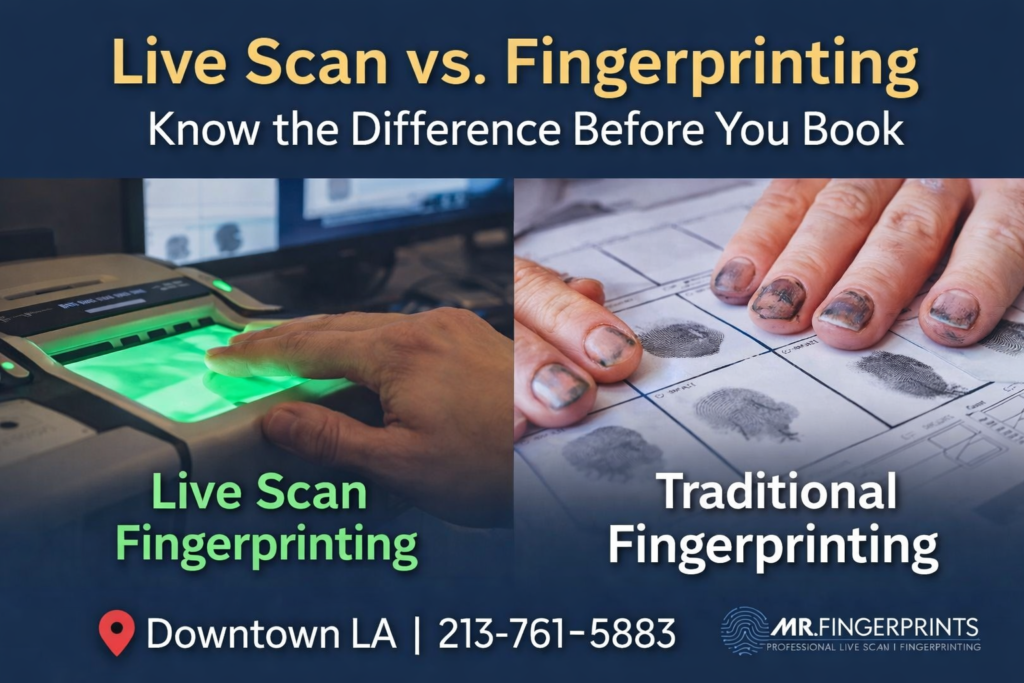
Many people search for live scan vs fingerprinting because they want to choose the correct method for a background check, license, or official application. Although both methods collect fingerprints, they work very differently. More importantly, agencies accept them in different ways.
If you choose the wrong method, you may face delays or rejections. Therefore, it’s important to understand the difference before you schedule your appointment.
What Is Live Scan Fingerprinting?
Live Scan fingerprinting uses a digital scanner to capture fingerprints electronically. After capture, the system sends the prints directly to the California Department of Justice (DOJ) and, when required, the FBI.
Unlike traditional methods, Live Scan does not use ink or paper cards. Instead, the technician scans your fingerprints and submits them securely through an approved network.
As a result, most agencies prefer Live Scan for:
- Employment background checks
- Professional licensing
- Healthcare and education credentials
- Government certifications
- Volunteer clearance
- Legal and immigration processing
What Is Traditional Ink Fingerprinting?
Traditional fingerprinting uses ink and fingerprint cards, usually the FD-258 card. During this process, a technician rolls each finger in ink and presses it onto paper.
Afterward, the applicant or agency mails the card for processing. Because this method depends on print quality and mailing time, it often takes longer.
For example, agencies still request ink cards when:
- An out-of-state agency requires fingerprints
- A federal card submission is required
- An international authority requests prints
- A specific fingerprint card appears in the instructions
Live Scan vs Fingerprinting — Key Differences
Here’s a clear comparison of Live Scan vs fingerprinting methods:
Capture Method
- Live Scan: Digital electronic scan
- Ink Fingerprinting: Manual ink roll
Submission
- Live Scan: Electronic DOJ/FBI transmission
- Ink Fingerprinting: Physical mailing required
Processing Speed
- Live Scan: Faster in most cases
- Ink Fingerprinting: Slower due to shipping and handling
Rejection Risk
- Live Scan: Lower rejection rate
- Ink Fingerprinting: Higher rejection risk from smudges
Paper Cards
- Live Scan: Not required
- Ink Fingerprinting: Required
Which Fingerprinting Method Should You Choose?
In most California cases, agencies require Live Scan fingerprinting. For example, the DOJ, licensing boards, and school districts usually mandate Live Scan submissions.
However, some agencies still require ink fingerprint cards. This situation often happens with out-of-state or special federal requests.
Therefore, you should always review your request form first. If you feel unsure, a certified Live Scan provider can verify the requirement before you proceed.
Are Live Scan Fingerprints DOJ and FBI Approved?
Yes — approved providers submit Live Scan fingerprints directly to the California DOJ and support FBI background check processing when required. The system sends prints electronically through secure government channels.
Because the process avoids paper cards, it reduces common errors and mailing delays. As a result, many agencies treat Live Scan as the preferred standard in California.
Why Many Applicants Prefer Live Scan
Most applicants choose Live Scan because it improves both speed and accuracy. In addition, the technician verifies print quality before submission.
Key advantages include:
- Faster processing timelines
- Secure electronic submission
- Lower rejection rates
- No ink or messy cards
- DOJ and FBI compatibility
- Immediate transmission
Live Scan Fingerprinting in Downtown Los Angeles
MR Fingerprints provides Live Scan fingerprinting in Downtown Los Angeles using certified equipment and DOJ-approved submission systems. Additionally, technicians review your request form and ORI codes before transmission to help prevent delays.
You can schedule same-day appointments in many cases. Mobile Live Scan services are also available for qualified group requests.
FAQs — Live Scan vs Fingerprinting
Live Scan is a type of fingerprinting. However, it uses digital capture and electronic submission instead of ink cards and mailing.
Yes. Because Live Scan sends fingerprints electronically, agencies usually process them faster.
No. Some agencies still require ink fingerprint cards. This requirement appears most often with out-of-state or special federal submissions.
Yes. Approved providers can submit Live Scan fingerprints for FBI background checks when the request allows electronic submission.
Live Scan produces fewer rejections. The system checks image quality before submission, which reduces errors.
Ready to Book Your Live Scan Appointment in Downtown Los Angeles?
If you need fast, accurate Live Scan fingerprinting, MR Fingerprints makes the process simple and secure. We provide DOJ-approved electronic fingerprint submission, help you avoid common form errors, and offer quick appointments in Downtown Los Angeles. Schedule your Live Scan today and keep your background check or licensing process moving without delays.