Request your own Criminal Background Checks

Criminal Background Checks

How to Request Criminal Background Checks in California

Criminal Background Checks

Criminal background checks allow individuals and agencies to review official criminal history records reported to the California Department of Justice (DOJ) and, when applicable, the FBI. These checks help verify identity, confirm record accuracy, and support employment, licensing, immigration, and personal record review requests.

In California, most criminal background checks require Live Scan fingerprinting, which electronically submits fingerprints to the DOJ for processing. This method is faster, more accurate, and more secure than traditional ink fingerprint cards.

What Are Criminal Background Checks?

Criminal background checks are official record searches performed by the DOJ or FBI using fingerprint data. These checks match your fingerprints against state and federal databases to identify arrests, charges, and case outcomes tied to your identity.

Because fingerprint-based background checks rely on biometric matching, they produce more reliable results than name-based searches. As a result, most government agencies and licensing boards require fingerprint submission.

Who Can Request Their Own Criminal Background Check?

California residents have the right to request a copy of their own criminal history record for review. This process is often called a Record Review request.

People commonly request personal criminal background checks to:

  • Verify record accuracy
  • Correct incomplete or outdated entries
  • Prepare for licensing or certification
  • Review records before employment screening
  • Support immigration or legal filings

However, you must submit fingerprints first. The DOJ will not process personal record reviews without Live Scan fingerprint submission.

How to Request Your Own Criminal Background Check (Step-by-Step)

Follow these steps to request your criminal background check in California:

Step 1 — Complete the Record Review Application

Fill out the DOJ Record Review Live Scan form (BCIA 8016RR). Select “Record Review” as the type of application and reason.

Step 2 — Submit Live Scan Fingerprints

Next, visit an approved Live Scan fingerprinting provider. The technician will capture and transmit your fingerprints electronically to the DOJ.

Step 3 — Pay Required Fees

You must pay the DOJ processing fee plus the Live Scan rolling fee charged by the fingerprint provider.

Step 4 — DOJ Processing

After submission, the DOJ reviews and matches your fingerprints against criminal history databases.

Step 5 — Receive Results by Mail

Finally, the DOJ mails your criminal background check results directly to you. Processing typically takes several business days.

Are Criminal Background Checks Submitted to DOJ and FBI?

Yes. Most California criminal background checks are submitted directly to the California Department of Justice. Additionally, some requests also trigger an FBI background check when federal clearance is required.

Live Scan fingerprinting sends your prints electronically to the correct agencies. Therefore, no paper fingerprint cards are required in most cases. Electronic transmission reduces delays and minimizes rejection risk.

Where to Get Criminal Background Checks in Downtown Los Angeles

You can complete criminal background checks through any approved Live Scan fingerprint provider. Choosing an experienced provider helps prevent submission errors and rejected prints.

At MR Fingerprints in Downtown Los Angeles, technicians:

  • Capture DOJ-compliant Live Scan fingerprints
  • Submit prints electronically
  • Review forms for accuracy
  • Reduce rejection risk
  • Support Record Review requests
  • Provide fast, professional service

As a result, your background check request moves through the system smoothly and without avoidable delays.

What Happens If You Find Errors in Your Criminal Record?

If your DOJ criminal background check contains errors or missing information, you can file a formal correction challenge.

You must submit a Claim of Alleged Inaccuracy or Incompleteness form and include supporting documentation. Then the DOJ reviews your claim and updates records when appropriate.

Because record corrections require documentation, always keep copies of court orders and disposition records.

How Long Do Criminal Background Checks Take?

Processing times vary. However, most DOJ criminal background checks complete within 3–7 business days after fingerprint submission. FBI checks may take longer depending on request type and volume.

Electronic Live Scan submissions typically process faster than mailed ink fingerprint cards.

How Long Do Criminal Background Checks Take?

Yes. Most official criminal background checks require Live Scan fingerprinting for accurate identity matching.

Yes. California residents can submit a Record Review request through the DOJ using Live Scan fingerprints.

Not always. Employment checks may include additional databases, while DOJ checks focus on official criminal history records.

You can visit any DOJ-approved Live Scan fingerprint provider, including MR Fingerprints in Downtown Los Angeles.

Ready to Complete Your Criminal Background Check?

Get your Live Scan fingerprints submitted correctly the first time. Visit MR Fingerprints in Downtown Los Angeles for fast, accurate, DOJ-approved criminal background check fingerprinting and professional support from start to finish.

Book your appointment today and complete your criminal background check with confidence.

California to Reconsider Fingerprint Checks for Uber, Lyft Drivers

Uber Fingerprint Checks

California Considers Live Scan Fingerprinting for Ride-Service Drivers

Background on Fingerprint Checks for Ride Services

The California Public Utilities Commission (CPUC) is considering requiring ride-service drivers, including those for Uber and Lyft, to undergo Live Scan fingerprint background checks. This discussion comes as Uber faces increased scrutiny over its screening process.

Previous Decisions and New Proposals

In January, Commissioner Liane Randolph decided against recommending stricter screenings for ride-service drivers. However, in a new proposal for transportation network companies, she stated that the CPUC would issue a ruling to explore background checks and driver identity verification through fingerprinting.

Randolph did include fingerprint checks in revised rules for services like Shuddle, which transport unaccompanied minors. The CPUC is set to review these proposals on March 17 during the “Phase II” regulatory process for transportation network companies.

Uber Faces Renewed Criticism

Recently, Uber has faced increased scrutiny regarding its background check process. A mass shooting in Michigan, allegedly committed by an Uber driver, has intensified concerns. The driver, Jason Dalton, had no prior criminal record, which Uber claims would have made no difference in preventing the incident.

Uber currently uses Checkr to conduct background checks, reviewing a driver’s criminal history over the past seven years. However, many law enforcement and transportation officials argue that fingerprint checks are the “gold standard” for background screening.

Industry Opinions on Background Checks

Dave Sutton, a spokesman for Who’s Driving You, a public safety campaign, believes Uber’s background checks are inadequate for drivers in trusted positions.

“Not all background checks are the same,” Sutton explained. “Fingerprint-based background checks, conducted by the government, provide a higher level of security.”

Many major U.S. cities require fingerprint background checks for taxi drivers. Taxi services argue that ride-share drivers should be subject to the same regulations.

Legal Challenges and Lawsuits

Uber recently settled two lawsuits for $28 million over accusations of misrepresenting its background check process. Additionally, the district attorneys of San Francisco and Los Angeles have sued Uber for misleading statements about its screenings.

An updated complaint in August revealed that Uber’s background checks failed in 25 cases in Los Angeles. Among those allowed to drive were registered sex offenders, identity thieves, burglars, and even a convicted murderer.

Limitations of Private Background Checks

Unlike government-conducted fingerprint background checks, private background check companies used by Uber lack access to California’s Department of Justice and federal criminal databases. These companies rely on commercial databases, which do not use biometric identifiers, increasing the risk of errors.

Uber’s Stance on Fingerprint Checks

Uber argues that fingerprint background checks are not 100% accurate and may include individuals who were arrested but never convicted. Uber Senior Adviser David Plouffe stated, “Fingerprinting can be discriminatory, denying opportunities to individuals who were arrested but not convicted.”

Recently, Uber announced a policy change, allowing individuals convicted of nonviolent felonies—later reduced to misdemeanors under California’s Proposition 47—to drive for the company.

Resistance to Fingerprint Checks

Many Uber drivers work part-time, driving fewer than 10 hours per week. Sutton believes Uber resists fingerprint checks because many part-time drivers would not go through the additional screening process.

“The companies know that requiring fingerprinting would discourage part-time drivers from signing up,” Sutton said.

Regulatory Battles in California and Beyond

Current California regulations require ride services to conduct background checks covering the past seven years but do not mandate fingerprinting. Sutton believes Uber’s political influence has slowed stricter screening regulations.

In Austin, Texas, Uber and Lyft have threatened to leave after the city council voted to require fingerprint checks. The companies supported a successful campaign to put the issue to a public vote, while some council members faced recall efforts for backing stricter regulations.

In California, legislative efforts to require fingerprint checks have repeatedly failed. Assemblyman Jim Cooper has introduced a bill for stricter background checks but has not explicitly included fingerprinting, opting for discussions with ride-service companies first.

Public Demand May Drive Change

Sutton believes ride-service companies will only change their policies when enough customers demand stricter background checks.

“What’s happening now is similar to what happened in the taxi industry,” Sutton explained. “After enough incidents, people recognized the need for stricter regulations.”

Conclusion

As scrutiny over ride-service background checks increases, the debate over fingerprinting remains ongoing. While Uber and Lyft argue against stricter measures, regulators and safety advocates continue to push for enhanced security protocols to protect passengers.

By <span class=”author”>

No Ink Fingerprinting at MR Fingerprints

No Ink Fingerprinting: Fast, Clean Digital Live Scan Explained

No Ink Fingerprinting

No ink fingerprinting uses modern Live Scan technology to capture fingerprints digitally instead of using traditional ink and paper cards. As a result, the process is faster, cleaner, and more accurate. Today, most government agencies prefer digital fingerprint capture for background checks and identity verification.

In California, agencies often require no ink fingerprinting through Live Scan submission to the Department of Justice (DOJ) and, when necessary, the FBI.

What Is No Ink Fingerprinting?

No ink fingerprinting is a digital fingerprinting method that scans your fingerprints electronically using a Live Scan device. Instead of rolling fingers in ink and pressing them onto cards, a technician captures your prints on a glass scanner.

The system then converts the images into secure digital files and submits them electronically to the requesting agency. Therefore, applicants avoid messy ink, smudged cards, and mailing delays.

People also refer to this method as:

  • Live Scan fingerprinting
  • digital fingerprinting
  • electronic fingerprint capture
  • inkless fingerprinting

How No Ink Live Scan Fingerprinting Works

First, a trained technician verifies your identification and request form. Next, you place your fingers on the Live Scan glass surface while the system captures each print. Meanwhile, the software checks image quality in real time.

After capture, the system encrypts and transmits the fingerprints directly to the DOJ or FBI when required. Because the system verifies clarity before submission, rejection rates stay much lower than with ink cards.

No Ink Fingerprinting vs Ink Fingerprinting

Both methods collect fingerprints, but they differ in speed, cleanliness, and reliability.

No Ink / Live Scan Fingerprinting

  • Digital capture
  • Electronic submission
  • Faster processing
  • Lower rejection risk
  • No paper cards
  • DOJ & FBI compatible

Ink Card Fingerprinting

  • Manual ink roll
  • Physical fingerprint cards
  • Slower processing
  • Higher rejection risk
  • Mailing required
  • Used for limited cases

In most California background check situations, agencies now require no ink Live Scan fingerprinting.

inkless fingerprinting

Is No Ink Fingerprinting DOJ and FBI Approved?

Yes. Approved Live Scan providers submit no ink fingerprints directly to the California DOJ and support FBI fingerprint background checks when required by the request type. The electronic transmission follows secure government standards.

Because agencies receive prints digitally, they can process results faster and with fewer quality issues. Consequently, licensing boards, employers, and state agencies rely on this method.

Who Needs No Ink Fingerprinting?

Many applicants must complete no ink fingerprinting for official screening and certification. For example, agencies require it for:

  • Employment background checks
  • Professional licenses
  • Healthcare credentials
  • Education and school clearance
  • Volunteer screening
  • State permits and certifications
  • Immigration-related processing

Always check your request form first. However, if the form lists an ORI number and DOJ routing, you likely need Live Scan no ink fingerprinting.

Benefits of No Ink Digital Fingerprinting

No ink fingerprinting offers several practical advantages. First, it improves accuracy. Second, it reduces processing time. Additionally, it removes the mess and variability of ink cards.

Key benefits include:

  • Clean, inkless process
  • Fast electronic submission
  • Real-time quality checks
  • Lower rejection rates
  • Secure encrypted transmission
  • Wide agency acceptance

No Ink Live Scan Fingerprinting in Downtown Los Angeles

MR Fingerprints provides no ink fingerprinting through DOJ-approved Live Scan services in Downtown Los Angeles. Our technicians capture prints using certified digital scanners and submit them securely to the proper agencies.

In addition, we review your forms before submission to help prevent routing errors and delays. Same-day appointments are often available.

No Ink Live Scan Fingerprinting in Downtown Los Angeles

No ink fingerprinting means a technician captures your fingerprints digitally using a Live Scan scanner instead of ink and paper cards.

Yes. In most cases, no ink fingerprinting refers to Live Scan digital fingerprinting.

Yes. Digital scanners verify print quality during capture, so they reduce smudges and rejected prints.

Yes. California DOJ background checks typically require Live Scan no ink fingerprinting.

Some out-of-state, federal, or international requests still require ink fingerprint cards. However, most California requests use no ink Live Scan.

Ready to Book Your No Ink Fingerprinting Appointment?

If you need fast and accurate no ink fingerprinting, MR Fingerprints provides DOJ-approved Live Scan services in Downtown Los Angeles with secure electronic submission and professional technicians. Schedule your appointment today to complete your digital fingerprinting quickly and avoid delays in your background check or licensing process. Call 213-761-5883 or book online now.

Live Scan vs. Fingerprinting?

Live Scan vs. Fingerprinting

Live Scan vs. Fingerprinting: What’s the Difference?

Live Scan vs. Fingerprinting

Many people search for live scan vs fingerprinting because they want to choose the correct method for a background check, license, or official application. Although both methods collect fingerprints, they work very differently. More importantly, agencies accept them in different ways.

If you choose the wrong method, you may face delays or rejections. Therefore, it’s important to understand the difference before you schedule your appointment.

What Is Live Scan Fingerprinting?

Live Scan fingerprinting uses a digital scanner to capture fingerprints electronically. After capture, the system sends the prints directly to the California Department of Justice (DOJ) and, when required, the FBI.

Unlike traditional methods, Live Scan does not use ink or paper cards. Instead, the technician scans your fingerprints and submits them securely through an approved network.

As a result, most agencies prefer Live Scan for:

  • Employment background checks
  • Professional licensing
  • Healthcare and education credentials
  • Government certifications
  • Volunteer clearance
  • Legal and immigration processing

What Is Traditional Ink Fingerprinting?

Traditional fingerprinting uses ink and fingerprint cards, usually the FD-258 card. During this process, a technician rolls each finger in ink and presses it onto paper.

Afterward, the applicant or agency mails the card for processing. Because this method depends on print quality and mailing time, it often takes longer.

For example, agencies still request ink cards when:

  • An out-of-state agency requires fingerprints
  • A federal card submission is required
  • An international authority requests prints
  • A specific fingerprint card appears in the instructions

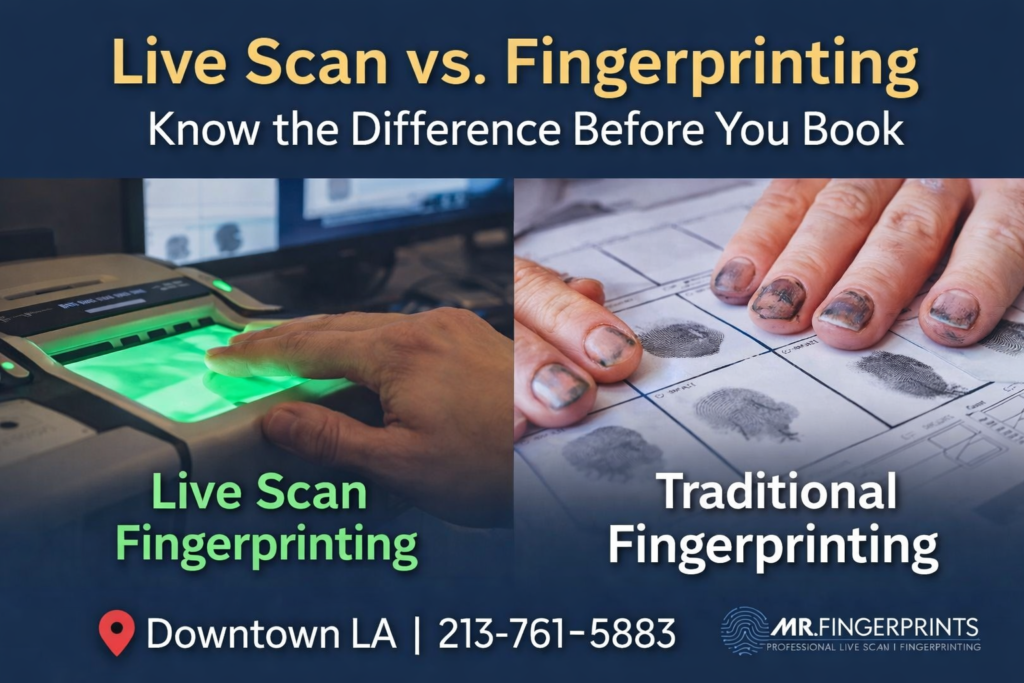
Live Scan vs Fingerprinting — Key Differences

Here’s a clear comparison of Live Scan vs fingerprinting methods:

Capture Method

  • Live Scan: Digital electronic scan
  • Ink Fingerprinting: Manual ink roll

Submission

  • Live Scan: Electronic DOJ/FBI transmission
  • Ink Fingerprinting: Physical mailing required

Processing Speed

  • Live Scan: Faster in most cases
  • Ink Fingerprinting: Slower due to shipping and handling

Rejection Risk

  • Live Scan: Lower rejection rate
  • Ink Fingerprinting: Higher rejection risk from smudges

Paper Cards

  • Live Scan: Not required
  • Ink Fingerprinting: Required

Which Fingerprinting Method Should You Choose?

In most California cases, agencies require Live Scan fingerprinting. For example, the DOJ, licensing boards, and school districts usually mandate Live Scan submissions.

However, some agencies still require ink fingerprint cards. This situation often happens with out-of-state or special federal requests.

Therefore, you should always review your request form first. If you feel unsure, a certified Live Scan provider can verify the requirement before you proceed.

Are Live Scan Fingerprints DOJ and FBI Approved?

Yes — approved providers submit Live Scan fingerprints directly to the California DOJ and support FBI background check processing when required. The system sends prints electronically through secure government channels.

Because the process avoids paper cards, it reduces common errors and mailing delays. As a result, many agencies treat Live Scan as the preferred standard in California.

Why Many Applicants Prefer Live Scan

Most applicants choose Live Scan because it improves both speed and accuracy. In addition, the technician verifies print quality before submission.

Key advantages include:

  • Faster processing timelines
  • Secure electronic submission
  • Lower rejection rates
  • No ink or messy cards
  • DOJ and FBI compatibility
  • Immediate transmission

Live Scan Fingerprinting in Downtown Los Angeles

MR Fingerprints provides Live Scan fingerprinting in Downtown Los Angeles using certified equipment and DOJ-approved submission systems. Additionally, technicians review your request form and ORI codes before transmission to help prevent delays.

You can schedule same-day appointments in many cases. Mobile Live Scan services are also available for qualified group requests.

FAQs — Live Scan vs Fingerprinting

Live Scan is a type of fingerprinting. However, it uses digital capture and electronic submission instead of ink cards and mailing.

Yes. Because Live Scan sends fingerprints electronically, agencies usually process them faster.

No. Some agencies still require ink fingerprint cards. This requirement appears most often with out-of-state or special federal submissions.

Yes. Approved providers can submit Live Scan fingerprints for FBI background checks when the request allows electronic submission.

Live Scan produces fewer rejections. The system checks image quality before submission, which reduces errors.

Ready to Book Your Live Scan Appointment in Downtown Los Angeles?

If you need fast, accurate Live Scan fingerprinting, MR Fingerprints makes the process simple and secure. We provide DOJ-approved electronic fingerprint submission, help you avoid common form errors, and offer quick appointments in Downtown Los Angeles. Schedule your Live Scan today and keep your background check or licensing process moving without delays.

We do Covered California Live Scans

banner lg e1452717062247

Covered California Live Scans

All employees & volunteers with Covered California will be required to take their Live Scan Fingerprinting.

What is Live Scan?

Live Scan is an inkless fingerprinting process that electronically transmits fingerprint records to the California Department of Justice in a matter of seconds.
Live Scan technology replaces the process of recording fingerprints using messy ink, and shortens the process of background clearances to a matter of days instead of weeks or months.
Prints submitted through the Live Scan process allows the DOJ to coordinate any additional processing that is necessary such as forwarding the prints to the FBI.

How does the process work?

A Trained and Certified Technician will scan your fingerprints using a Live Scan machine.
The electronic fingerprinting session takes five to ten minutes and your prints are immediately sent via electronic transmission to the appropriate FBI-Certified channeling agencies for background processing.

What if I have already been Live Scanned or fingerprinted for another organization?

The California Department of Justice (DOJ) does not typically allow for the sharing of background information between organizations.
Each organization typically must request background information via Live Scan using their individual DOJ issued vendor number.

What do I need to bring?

To be Live Scan fingerprinted you will need to provide a completed Request for Live Scan form for your specific need and a current valid photo ID.
Examples of acceptable identification are:

  • California Driver’s License
  • California DMV identification Card
  • Valid out-of-state Driver’s License
  • Military ID
  • Passport
  • Resident Alien Card
  • Immigration Card
  • Green Card

How long will it take for my results?

You, your employer, or organization should receive your Live Scan Results within 7 to 10 days. MR Fingerprints is not responsible for the result of your Live Scan submission.
Therefore please allow a minimum of seven days before making a status inquiry. Applicants should check first with the agency that requested the background review since the Department of Justice sends results directly to the applicant agency.

We offer fast and 100% accurate live scan services, both Mobile Live Scan and at our downtown LA office location. MR Fingerprints is Certified by California Department of Justice (DOJ) and by the Federal bureau of Investigation (FBI).

FORMS:

State Employ Only

Plan Based Enrollers Only

CalHeers Only

WE CAN NOW DO YOUR COVERED CALIFORNIA LIVE SCAN
FINGERPRINTING BACKGROUND CHECKS. PLEASE CALL US TO SET
UP AN APPOINTMENT TODAY.